Why Retatrutide Guides Use a Diluent-to-Powder Ratio
Some retatrutide guides list a diluent-to-powder ratio instead of a fixed total volume. Here's what that ratio actually sets and why it matters.
Reviewed by Sarah Chen, MD, endocrinologist ·
Sarah Chen, MD is a board-certified endocrinologist with 14 years of clinical and research experience in metabolic disorders and hormonal therapeutics, with fellowship training at Johns Hopkins Hospital.
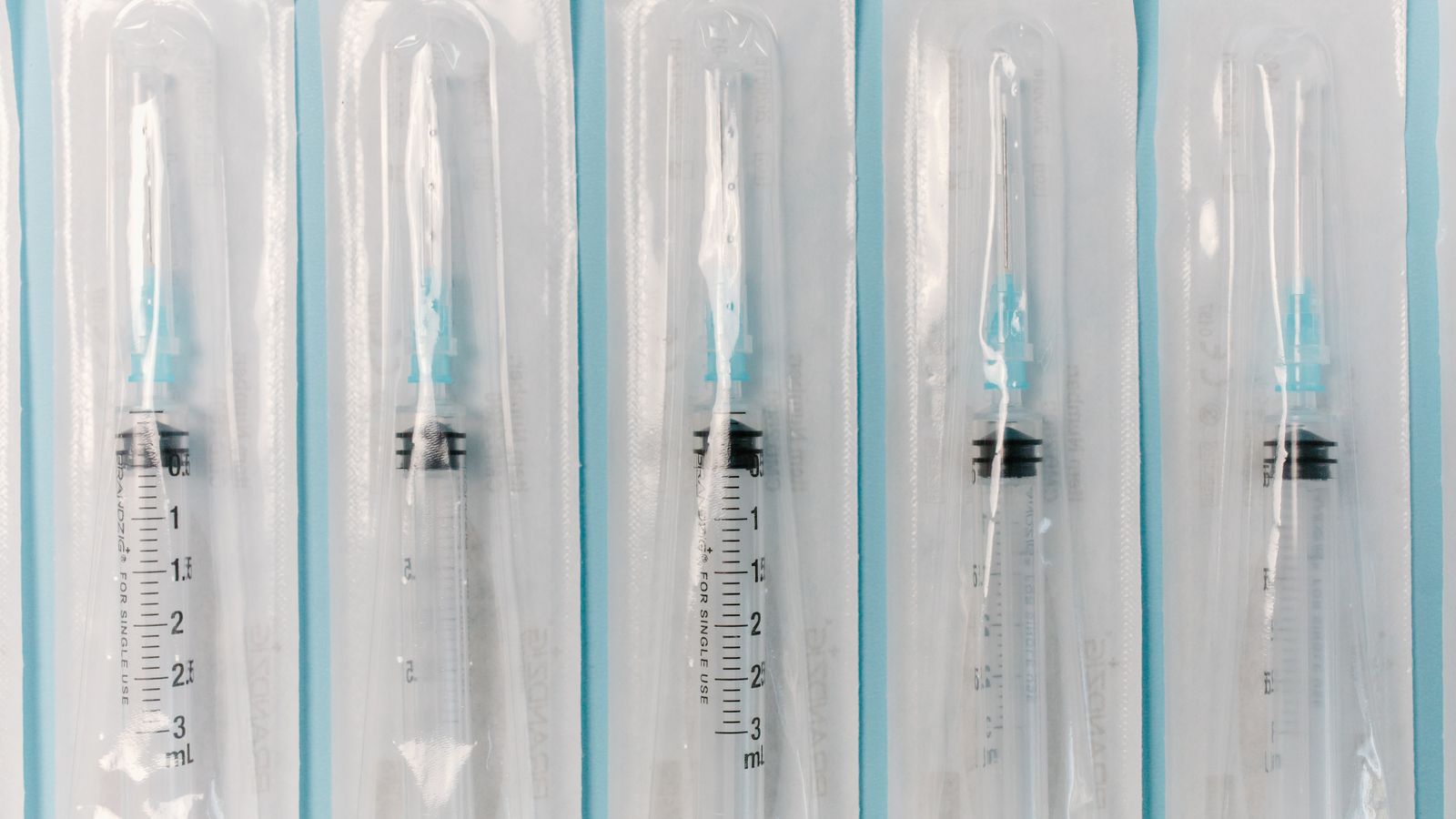
Some retatrutide reconstitution guides specify a diluent-to-powder ratio instead of a total volume because a fixed volume only produces a predictable concentration when every vial contains the same amount of powder. Retatrutide listings do not all contain the same amount — vials are labeled with different nominal peptide content, and a ratio-based instruction is the only format that keeps the resulting concentration consistent across those different labels.
What a “Total Volume” Instruction Assumes
A total-volume instruction reads something like “add 2 mL of bacteriostatic water to the vial.” That instruction says nothing about how much peptide is in the vial. It works as a fixed step only if the reader already knows the vial’s labeled content and is willing to do the concentration math themselves afterward, or if every vial in a product line happens to carry the same nominal amount of powder.
The problem is that retatrutide is sold in vials labeled with a range of nominal weights. A single fixed-volume instruction applied across a 5 mg vial, a 10 mg vial, and a 15 mg vial produces three different concentrations, even though the instruction text looks identical on every listing. A reader who reuses a total-volume figure from one vial size on a different vial size ends up with a concentration that does not match what they expect.
What a Diluent-to-Powder Ratio Locks In Instead
A ratio-based instruction reads something like “add 1 mL of diluent per 5 mg of powder.” Written this way, the volume of diluent scales with the amount of powder actually in the vial, so the concentration — powder weight divided by diluent volume — stays the same no matter which vial size the ratio is applied to. This is the core reason some retatrutide reconstitution guides specify a diluent-to-powder ratio instead of a total volume: the ratio format is what keeps concentration constant when vial content is not standardized.
Concentration is calculated the same way regardless of which method a guide uses:
Concentration (mg/mL) = vial content (mg) ÷ diluent volume added (mL)
A ratio simply fixes that equation’s outcome ahead of time. A total-volume instruction only fixes the denominator, leaving the outcome to vary with whatever numerator (vial content) happens to be on the label.
Worked Example: One Ratio Across Three Vial Sizes
The table below compares what happens to concentration when a fixed 2 mL total-volume instruction is applied to three different retatrutide vial sizes, versus applying a diluent-to-powder ratio of 1 mL of diluent per 5 mg of powder to the same three vials.
| Vial content | Diluent added (fixed 2 mL rule) | Resulting concentration | Diluent added (ratio: 1 mL per 5 mg) | Resulting concentration |
|---|---|---|---|---|
| 5 mg | 2 mL | 2.5 mg/mL (2,500 mcg/mL) | 1 mL | 5 mg/mL (5,000 mcg/mL) |
| 10 mg | 2 mL | 5 mg/mL (5,000 mcg/mL) | 2 mL | 5 mg/mL (5,000 mcg/mL) |
| 15 mg | 2 mL | 7.5 mg/mL (7,500 mcg/mL) | 3 mL | 5 mg/mL (5,000 mcg/mL) |
Under the fixed-volume column, concentration triples between the smallest and largest vial. Under the ratio column, concentration holds at 5 mg/mL regardless of vial size, because the diluent volume was scaled to match the powder amount each time. Recomputing: 5 mg ÷ 1 mL = 5 mg/mL; 10 mg ÷ 2 mL = 5 mg/mL; 15 mg ÷ 3 mL = 5 mg/mL. All three confirm the same figure, which is the point of writing the instruction as a ratio rather than a number of milliliters.
Converting the Result to a Syringe Reading
Once a concentration is fixed, it can be translated into a per-unit figure for a standard U-100 insulin syringe, where 1 mL corresponds to 100 unit marks on the barrel. Using the 5 mg/mL result from the ratio example above: 5 mg equals 5,000 mcg (since 1 mg = 1,000 mcg), and 5,000 mcg spread across 100 units works out to 50 mcg per unit mark.
Compare that with the fixed-volume column at the 5 mg vial row, where the concentration came out to 2.5 mg/mL (2,500 mcg/mL). Spread across 100 units, that is 25 mcg per unit — half the per-unit figure of the ratio-based result, from the same 5 mg vial, purely because the diluent volume was not scaled to the powder amount. This is why a guide that mixes fixed-volume language with vials of varying nominal content can produce per-unit figures that look inconsistent between listings even when the arithmetic in each individual guide is correct.
Reading a Ratio Correctly on a Listing
When a listing or guide states a ratio rather than a volume, the ratio applies to the specific vial’s labeled content, not to a generic “per vial” assumption. A ratio written as “1 mL per 5 mg” needs to be multiplied out against the actual mg figure printed on that vial — a 20 mg vial under that same ratio takes 4 mL of diluent, not 1 mL. Treating a ratio as if it were a flat volume defeats the purpose of specifying it as a ratio in the first place.
It is also worth checking whether a guide’s ratio is stated per milligram or per some other unit of powder, since the two are not interchangeable. A ratio expressed in different units requires converting the vial’s labeled content into matching units before applying the ratio, the same way the milligram-to-microgram conversion above requires multiplying by 1,000 rather than assuming the two units are equivalent.
Background on Retatrutide as a Research Compound
Retatrutide is studied in the research literature as a triple receptor agonist acting on GIP, GLP-1, and glucagon receptor pathways, a design shared with earlier multi-receptor agonist candidates described in a 2013 study of a DPP-IV-resistant triple-acting GIP, GLP-1, and glucagon receptor agonist and reviewed more broadly in a 2025 review of GLP-1 receptor agonist and multi-receptor agonist mechanisms. More recent work, including multi-omic profiling research examining retatrutide’s tissue-level effects, continues to characterize how this class of molecule behaves at the receptor and tissue level. None of this literature addresses reconstitution procedure directly — that is a handling and labeling question, not a pharmacology question — but it is the underlying context for why retatrutide appears in research supply listings at all.
For readers doing repeated concentration or per-unit conversions across multiple vial sizes, a dedicated calculator such as peptcalc.com can reduce arithmetic errors compared to recalculating each ratio by hand.
Summary
A diluent-to-powder ratio and a total-volume instruction both describe how to reconstitute a vial, but they solve different problems. Total volume is simple to follow but only yields a consistent concentration when vial content is uniform. A ratio is slightly more work to apply but holds concentration constant across vial sizes that are not uniform, which is why some retatrutide reconstitution guides specify a diluent-to-powder ratio instead of a total volume: it is the format that stays accurate as the vial’s labeled content changes.
A note on how to read this
This article is written for research and educational reference. The materials described are sold for laboratory research and are not for human consumption. Nothing here is dosing guidance, a prescription, or a clinical recommendation.