Why Bacteriostatic Water Beats Sterile Water for Reconstitution
A look at why bacteriostatic water is used instead of sterile water for reconstitution, covering benzyl alcohol preservation, vial handling, and dilution math.
Reviewed by Sarah Chen, MD, endocrinologist ·
Sarah Chen, MD is a board-certified endocrinologist with 14 years of clinical and research experience in metabolic disorders and hormonal therapeutics, with fellowship training at Johns Hopkins Hospital.
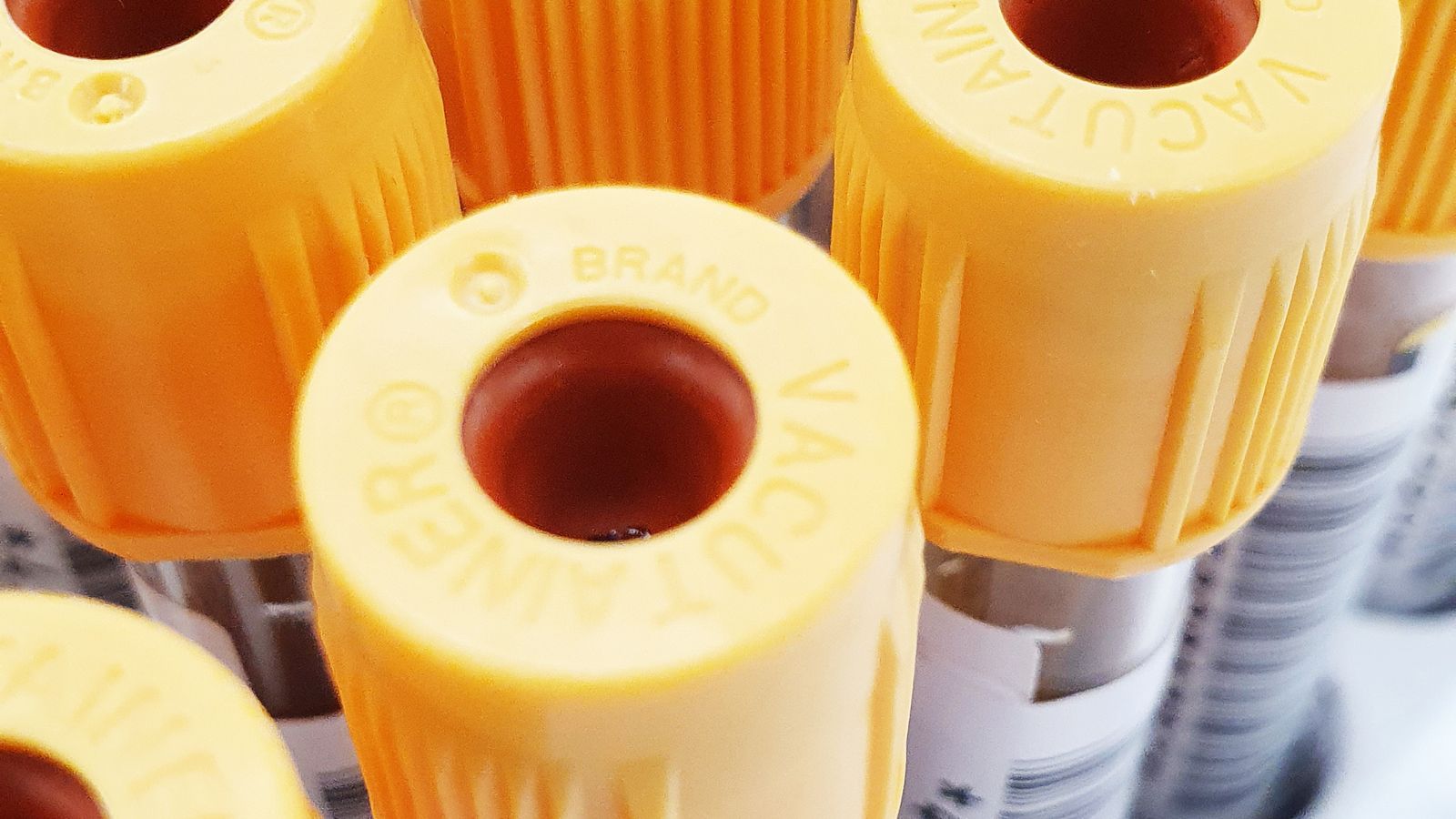
Bacteriostatic water is used instead of sterile water for reconstitution because it contains a preservative, benzyl alcohol, that inhibits bacterial growth across repeated access to the same vial. Sterile water has no such preservative. Once a stopper is punctured, sterile water offers no protection against contamination on the second, third, or later draw, which is why listings for lyophilized peptide vials almost always specify bacteriostatic water as the diluent rather than plain sterile water.
What “Bacteriostatic” Actually Means
The word describes a property, not a purity level. Both bacteriostatic water and sterile water for injection start out sterile — free of living organisms at the time of manufacture. The difference shows up after the vial is opened. Bacteriostatic water is formulated with approximately 0.9% benzyl alcohol, an additive that slows or halts the growth of bacteria that might be introduced during handling. Sterile water carries no such additive, so it is intended for a single draw and disposal, not for a vial that gets accessed multiple times over days or weeks.
This distinction matters specifically for reconstitution scenarios, where a lyophilized (freeze-dried) powder is dissolved with a liquid diluent and then drawn from repeatedly. A single-use ampoule of sterile water is designed to be opened once and used immediately. A multi-dose vial of bacteriostatic water is designed for the opposite case: a stopper that will be pierced by a needle many times before the vial is finished.
Why Repeated Access Is the Deciding Factor
Every time a needle passes through a rubber stopper, there is a small chance of introducing microorganisms from the air, the needle, or the surrounding surface. With a preservative-free diluent, that risk compounds with each draw because nothing in the liquid discourages growth between uses. With bacteriostatic water, the benzyl alcohol content is there specifically to suppress that growth, which is why it is the standard diluent choice for any vial that will be reconstituted and then accessed on a multi-dose basis rather than emptied in one draw.
This is also why bacteriostatic water is not interchangeable with sterile water in listings and product documentation, even though both are, at the point of manufacture, sterile liquids. The labeling distinction reflects intended use pattern, not a difference in initial cleanliness.
Reading Vial Labels Correctly
Listings for reconstitution supplies typically separate the two diluents by name, and the distinction is usually explained in terms of multi-dose versus single-dose handling rather than sterility itself.
| Diluent | Contains preservative | Typical vial use |
|---|---|---|
| Bacteriostatic water | Benzyl alcohol (~0.9%) | Multi-dose vials, repeated draws |
| Sterile water for injection | None | Single-use ampoules or immediate one-time use |
A vial labeled for reconstitution with bacteriostatic water is signaling that it is meant to be drawn from more than once. A sterile water ampoule, by contrast, is typically sized and packaged for one dissolution event and prompt use, with no expectation of storage between draws.
Concentration Math After Reconstitution
Regardless of which diluent a listing specifies, the concentration math after reconstitution works the same way: concentration equals the mass of peptide in the vial divided by the volume of diluent added. A worked example illustrates how the same vial can be described in different unit systems depending on how much diluent is added.
Suppose a vial is labeled at 5 mg of lyophilized peptide, and 2 mL of bacteriostatic water is added to reconstitute it.
Concentration = 5 mg / 2 mL = 2.5 mg/mL.
Converting to micrograms: 2.5 mg/mL × 1000 mcg/mg = 2500 mcg/mL.
On a U-100 insulin syringe, where 1 mL corresponds to 100 unit markings, each unit mark represents 1/100 of a mL, or 0.01 mL. At a concentration of 2500 mcg/mL, each unit mark on the syringe corresponds to 2500 mcg × 0.01 = 25 mcg. Doubling the diluent to 4 mL would halve the concentration to 1.25 mg/mL (1250 mcg/mL), which would in turn halve the mcg-per-unit figure to 12.5 mcg. This inverse relationship — more diluent lowers concentration, less diluent raises it — holds regardless of which water type is used, since the benzyl alcohol content does not meaningfully change the volume math. Anyone working through these conversions can cross-check the arithmetic with a general-purpose tool like the reconstitution calculator at peptcalc.com.
Storage Considerations Tied to the Preservative
Because bacteriostatic water’s preservative is what makes multi-dose access viable, storage guidance for reconstituted vials is generally built around keeping that preservative effective — typically refrigeration and a defined use window rather than indefinite storage. Sterile water, lacking a preservative, is not typically described with a multi-week use window at all, since it was never intended to support that pattern of access. Reference material describing these handling conventions, including how benzyl alcohol content relates to shelf stability once a vial is opened, is compiled on pages like the retatrutide overview at HEEZ Research, which catalogues terminology and diluent conventions used across reconstitution listings.
Terminology Overlap in Listings
Some listings use “bac water” as shorthand for bacteriostatic water, and it is common to see the two terms used interchangeably in vendor documentation and community discussion. This shorthand refers to the same benzyl-alcohol-preserved diluent described above, not a separate product. Recognizing this shorthand is useful when comparing listings, since a vial described as compatible with “bac water” is making the same multi-dose claim as one that spells out “bacteriostatic water” in full.
Sterile water, by contrast, rarely picks up a comparable nickname in these listings, which itself is a small signal of how differently the two diluents are treated: one is built around repeated, sustained access, and the other is not.
Summary
Bacteriostatic water is used instead of sterile water for reconstitution primarily because its benzyl alcohol content supports safer handling of a vial across multiple draws, while sterile water is suited to a single, immediate use. The concentration math after reconstitution — mass divided by diluent volume, then converted to mcg or unit markings as needed — is identical regardless of which diluent a listing specifies, but the diluent choice itself reflects how a vial is expected to be accessed over its use life.
A note on how to read this
This article is written for research and educational reference. The materials described are sold for laboratory research and are not for human consumption. Nothing here is dosing guidance, a prescription, or a clinical recommendation.