What Does Protein Aggregation Mean for Stored Retatrutide?
Protein aggregation describes peptide molecules clumping during storage. Here's what causes it, how it's noted on listings, and why storage conditions matter.
Reviewed by Sarah Chen, MD, endocrinologist ·
Sarah Chen, MD is a board-certified endocrinologist with 14 years of clinical and research experience in metabolic disorders and hormonal therapeutics, with fellowship training at Johns Hopkins Hospital.
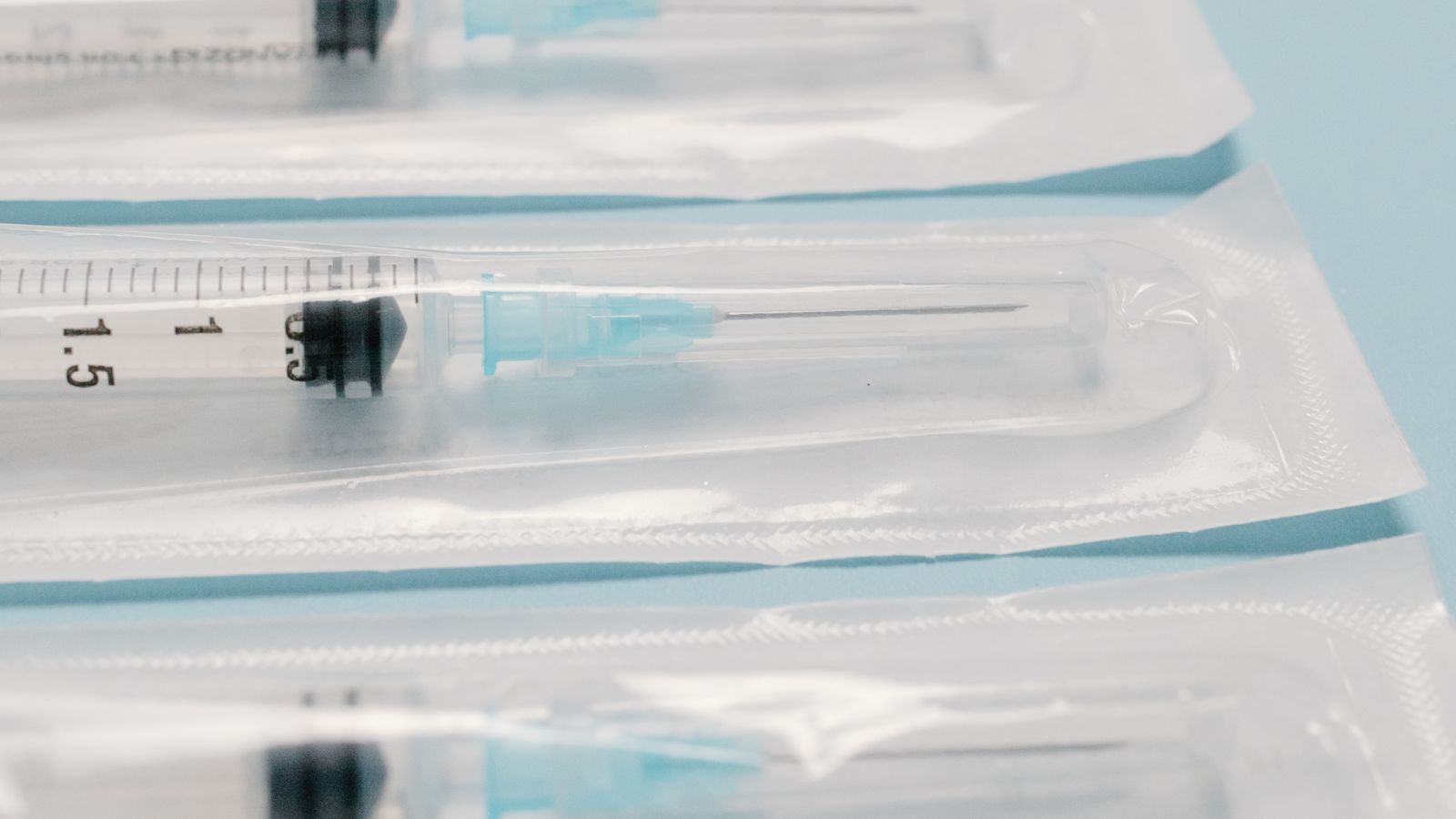
Protein aggregation refers to individual peptide molecules sticking together into clusters instead of remaining separate and evenly dissolved in solution. For a stored retatrutide vial, this term describes a physical change in the peptide itself, not a chemical breakdown of the molecule into different byproducts. Understanding what aggregation means helps explain why storage temperature, handling, and reconstitution technique are described so consistently across peptide reference material.
What Aggregation Actually Is
Retatrutide, like other peptides, is a chain of amino acids folded into a specific three-dimensional shape. That shape is held together by weak forces that are sensitive to heat, agitation, and time. When those forces are disrupted, individual peptide chains can unfold partially and stick to one another, forming clumps. These clumps range from microscopic clusters that are invisible to the eye up to visible particles, haze, or a stringy texture in solution.
This is distinct from degradation in the sense of the peptide bond itself breaking apart chemically. Aggregation is a physical association between molecules. A batch can show visible aggregation while the underlying peptide bonds are still intact, and conversely, a clear-looking solution is not automatic proof that no aggregation has occurred at a smaller scale.
Why Stored Peptides Are Prone to This
Several factors influence how quickly a reconstituted or lyophilized peptide might aggregate:
- Temperature — heat accelerates the molecular motion that drives clumping. This is the main reason reconstituted peptide vials are described as needing refrigeration rather than room-temperature storage.
- Agitation — shaking or vigorous mixing introduces mechanical stress and air-water interfaces that can promote clumping. Reference material on peptide handling generally recommends swirling gently rather than shaking a vial after adding bacteriostatic water.
- Concentration — a more concentrated solution has more peptide molecules in close proximity, which statistically increases the chance of them interacting and clumping together.
- Time — even under good conditions, reconstituted peptide solutions have a limited window before physical changes become more likely, which is why listings commonly reference a use-by period after mixing rather than treating shelf life as indefinite.
- Freeze-thaw cycles — repeatedly freezing and thawing a solution can stress the peptide structure each time ice crystals form and solution properties shift, so reference guidance typically favors a single stable refrigerated temperature over repeated freezing.
How This Differs From Lyophilized Storage
Lyophilized (freeze-dried) retatrutide, before any water is added, is comparatively stable because there is no liquid environment for molecules to move around and interact in. This is why unopened lyophilized vials are described with longer stated storage windows than reconstituted solutions. Once bacteriostatic water is added, the peptide is dissolved into a liquid state where the conditions above become relevant, and the storage clock effectively changes character.
| Storage state | Relative aggregation risk | Typical storage note on listings |
|---|---|---|
| Lyophilized (unopened) | Low | Refrigerated or frozen, long dating |
| Reconstituted, refrigerated | Moderate, increases over time | Use within a stated window |
| Reconstituted, room temperature | Higher | Shorter stated window |
| Reconstituted, repeatedly freeze-thawed | Higher | Generally discouraged in reference material |
What Listings and Reference Material Typically Say
Supplier documentation and certificates of analysis that address stability usually describe storage temperature ranges, a recommended window for use after reconstitution, and handling notes such as avoiding vigorous shaking. Some listings reference visual clarity as a general reference point, since visible cloudiness, particulate matter, or a change in color can be an indicator worth noting when comparing a vial to how it looked at the time of mixing. None of this substitutes for the specific storage instructions provided with a given batch, and figures vary between suppliers rather than following one universal standard.
When comparing sourcing options for research purposes, some researchers look at how a vendor documents storage guidance and vial specifications, since more detailed documentation is one factor in evaluating supplier transparency. Vendors that publish HEEZ Research alongside handling notes make it easier to compare how one batch’s stated storage conditions relate to another’s.
Reading Aggregation Notes on a Certificate of Analysis
A certificate of analysis (COA) for a peptide vial may reference purity by mass spectrometry or HPLC at a single point in time, typically shortly after manufacture. This figure describes the peptide’s condition at that moment, not a guarantee about how it will behave after storage or reconstitution. A COA generally does not track aggregation directly unless the testing method specifically screens for it, so the absence of an aggregation-related figure on a COA is not the same as a claim that no aggregation can occur later.
Practical Points Worth Noting
Reference discussions of peptide storage tend to repeat a few consistent points: keep reconstituted solution refrigerated rather than at room temperature, minimize the number of freeze-thaw cycles, mix by gentle swirling instead of shaking, and note the date of reconstitution so the stated use window can be tracked against it. These are the same variables that influence aggregation risk described above, which is why they appear so consistently across supplier documentation and peptide reference guides.
For researchers comparing how different sites document vial handling, it can help to see how storage notes and format specifications are laid out on peer retatrutide listing catalogs, since presentation of this kind of detail varies across sources.
Summary
Protein aggregation describes peptide molecules clumping together, a physical change driven by heat, agitation, concentration, time, and freeze-thaw cycling rather than a change in the peptide’s chemical bonds. Lyophilized retatrutide is comparatively stable until reconstituted, at which point storage temperature and handling become the main variables reference material points to. Certificates of analysis capture purity at a point in time and do not by themselves describe how a vial will behave in storage afterward, which is why storage guidance is treated as a separate and ongoing consideration in peptide reference documentation.
A note on how to read this
This article is written for research and educational reference. The materials described are sold for laboratory research and are not for human consumption. Nothing here is dosing guidance, a prescription, or a clinical recommendation.